
Panama's Qualified Investor Visa Changed on 16 September 2026. Here Is What the New Decree Says.
Executive Decree 17 of 2026 replaced Panama's investor visa rules on 16 September: $300,000 still qualifies for a new property bought from the developer, a resale now needs $500,000, and anyone who signed before the decree has six months to file under the old rules. What changed, article by article, and what to do if you are mid-purchase.
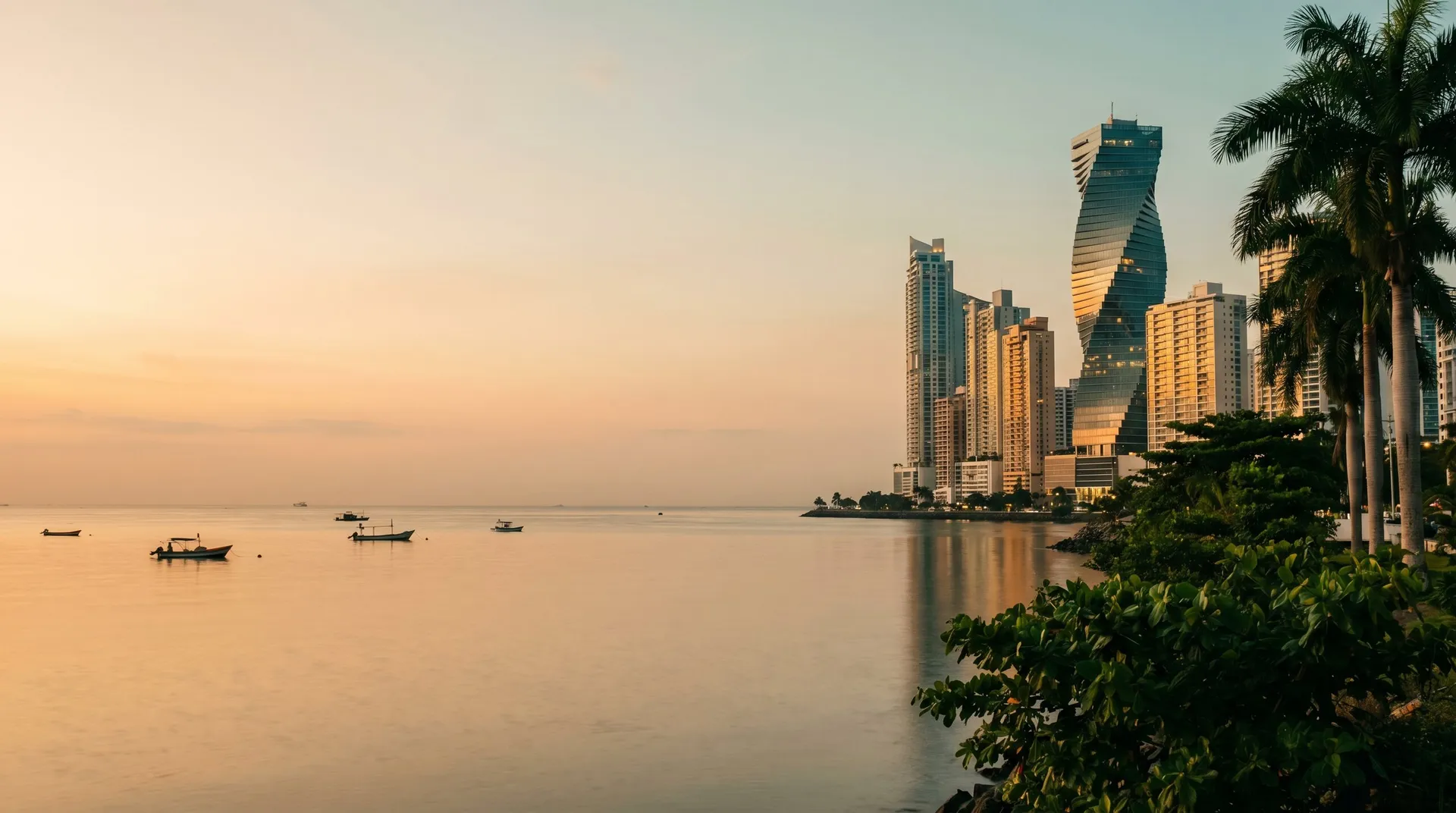
Executive Decree 17 of 8 September 2026, published on 16 September, replaces Panama's Qualified Investor Visa decree in full. The minimum stays at $300,000 for a new property bought from the developer and rises to $500,000 for a resale. A deposit at the two state banks now qualifies at $500,000. Applications filed before 16 September keep the old rules [Decreto Ejecutivo 17/2026, arts. 4, 9, 19, 20 and 21; Gaceta Oficial 30613].
For two months the market has been counting down to 15 October 2026, the day the $300,000 property minimum for the Panama Qualified Investor Visa was supposed to rise to $500,000. That date was never written into any decree. The change came anyway, a month early and in a different shape. Executive Decree 17 was signed on 8 September and appeared in the Gaceta Oficial on Wednesday 16 September, with no announcement and no run-in period for new buyers. It rewrites the programme from the first article to the last. We have read all fifteen pages. Here is what changed, who it affects and what to do if you are mid-purchase.
What the new decree is
Executive Decree 17 of 8 September 2026 was signed by the President and the Minister of Public Security and published in Gaceta Oficial 30613 on 16 September 2026. It takes effect on publication [DE 17/2026, art. 21] and replaces in full Executive Decree 722 of 2020 together with its 2022 and 2024 amendments [DE 17/2026, art. 20]. Twenty-one articles now hold the whole programme: who qualifies, how an investment is valued and verified, how the residency is kept and what happens to files already in the system. The recitals give the reasons: construction as an engine of employment, a policy choice to steer buyers towards new inventory instead of resales, tighter controls on pre-construction promises, appraisals to stop overvaluation, family unity for dependants who arrive later and a deposit incentive for the two state banks.
The new minimums
| Route | Minimum | What the decree says |
|---|---|---|
| New property bought from the developer (first sale) | B/.300,000 | A new, unoccupied unit transferred by the developer or its successor. Segregation, a declaration of improvements, a contribution to a trust or a corporate reorganisation do not break the first-sale condition [art. 4(a)]. |
| Resale property (secondary market) | B/.500,000 | New tier. Any property previously sold, occupied, leased or transferred to an unrelated third party. Simulated transfers designed to dodge the higher minimum can be disregarded [art. 4(b)]. |
| New property by promise of sale | B/.300,000 | Price held in trust with a licensed bank or trust company, or 100 percent paid to the developer against an irrevocable bank instrument [art. 7]. |
| Panamanian securities | B/.500,000 aggregate | Limited to named classes: registered private equity and venture funds investing in Panama, Panamanian government bonds, notes and bills, and registered corporate securities including REITs, bought through a licensed brokerage and held five years [art. 8]. |
| Fixed-term deposit, private bank | B/.750,000 | Five calendar years, free of liens, pledges and blocks, funded by international transfer [art. 9(a)]. |
| Fixed-term deposit, Banco Nacional de Panamá or Caja de Ahorros | B/.500,000 | New incentive tier, and these two state banks are the only ones authorised for it. Same five-year term and conditions [art. 9(b)]. |
The balboa is fixed at par with the US dollar. Every figure above is the net amount that has to be shown, funded from the applicant's own money from outside Panama [DE 17/2026, art. 2]. A deposit at a private bank still needs B/.750,000 and securities still need B/.500,000, each held for five years.
Before and after, side by side
The three routes are the same in kind as before: real estate, a bank deposit and securities. What changed is that two of them now have tiers, and the rules around value, funds and pre-construction got stricter.
| Route | Before 16 September 2026 (Decree 722 as amended) | From 16 September 2026 (Executive Decree 17 of 2026) |
|---|---|---|
| Real estate, new from the developer | B/.300,000 | B/.300,000, net of any mortgage |
| Real estate, pre-construction | B/.300,000, trust or developer payment with a bank guarantee | B/.300,000, in trust with a licensed bank or trust company, or paid in full to the developer against an irrevocable first-demand bank instrument; 180 business days to substitute on default; three-year cap on promise-of-sale status |
| Real estate, resale | B/.300,000 | B/.500,000 |
| Securities | B/.500,000, five years | B/.500,000 in named classes (registered funds, government bonds, registered corporates), five years |
| Bank deposit, private bank | B/.750,000, five years | B/.750,000, five years |
| Bank deposit, Banco Nacional de Panamá or Caja de Ahorros | B/.750,000 | B/.500,000, five years |
| Source of funds | Foreign source | Own funds, traceable; gifts and donations excluded |
| Files already in progress | n/a | Filed before 16 September 2026: old rules. Signed before, not yet filed: six months to file under the old rules |
Before column: Decree 722 of 2020 as amended by Decrees 109 of 2022 and 193 of 2024. After column: Executive Decree 17 of 2026, arts. 2, 4, 5, 7, 8, 9 and 19.
How a property is valued now
This is the part that will catch people. The decree counts the net value of the property: the lower of the price actually paid and its reasonably supported commercial value, less the balance of any mortgage or other real encumbrance [DE 17/2026, art. 5(a)]. That net figure has to reach the minimum. You can still finance the part of the price above the minimum, provided the loan is documented and traceable and no lien takes the net value below the line [art. 5(b)]. Nothing counts that has not actually been paid to the seller, developer or trustee [art. 6, numerals 10 and 11].
MICI keeps the ANATI cadastral certificate and adds a risk-based check. Where the cadastral value looks stale or the price looks out of line with the market, it can require an independent commercial appraisal, issued within the previous six months by a valuer recognised by Banco Nacional and Caja de Ahorros, independent of buyer, seller, developer, broker and lender, at the applicant's cost [art. 6, numerals 3 to 9]. Deliberate overvaluation, false documents or simulated contracts are referred on, and an irregularity found after the residency is granted goes to Migración [art. 6, numerals 15 to 17].
Buying off-plan under the new rules
Pre-construction is primary market by definition and still qualifies at B/.300,000. It is not as direct as buying a finished unit, though. The decree attaches conditions that a completed purchase does not carry. There are two mechanisms: a deposit of the price in trust with a licensed bank or trust company, and payment of 100 percent to the developer [DE 17/2026, art. 7, numeral 1]. Direct payment must be backed by a bank instrument from a licensed Panamanian entity in the investor's favour that is irrevocable, unconditional and payable on first demand: a standby letter of credit, an irrevocable bank aval or a performance guarantee, for at least the full investment, kept alive and re-presented to MICI every year until the unit is built, segregated and registered in the buyer's name [art. 7, numerals 2 and 3]. Any balance above the minimum needs a payment schedule written into the contract [art. 7, numeral 4].
The decree also puts a clock on off-plan. If the developer misses the contractual deadline, the investor has 180 business days to move the money into another qualifying route [art. 7, numeral 6]. A second promise of sale is allowed once. If that one fails as well, only a completed property, securities or a deposit will do [art. 7, numeral 7]. And residency can rest on promise-of-sale contracts for no more than three years in total, continuous or not, after which the permit is cancelled unless the title has been registered or the investment replaced [art. 7, numeral 8].
Where the money has to come from
The investment must be the applicant's own money, with ownership and a paper trail, and it must arrive from outside Panama. Gifts and donations from third parties do not count towards the minimum [DE 17/2026, art. 2]. Foreign funds means money that entered the Panamanian financial system by international transfer or money already in a Panamanian bank that can be traced to an earlier international transfer [art. 3, numeral 9]. Proof is a bank letter (apostilled or legalised if issued abroad), an authenticated bank statement showing the transfer or a notarised letter from the recipient with the bank's confirmation [art. 3, numeral 7]. Investing through a company or private interest foundation, Panamanian or foreign, is allowed if you prove its existence, ownership, beneficial owner, legal representation and effective control, with the documents apostilled and translated [art. 2; art. 5(c)].
Timing, paperwork and fees
MICI's investment certificate is valid for three months and must be in date when the complete file reaches Migración [DE 17/2026, art. 3, numeral 4]. MICI has fifteen business days from admission of the file to issue it. An incomplete file gets fifteen business days to be cured, and if it is not cured the application is archived and starts again [art. 15, numeral 1]. Migración then has thirty business days from receipt of the complete file [art. 15, numeral 2]. The application can still be filed through a special attorney before you enter Panama, with biometric registration before any card is issued [art. 16]. The fees are set out in the decree: B/.5,000 to the National Treasury and a B/.5,000 repatriation deposit to Migración for the main applicant, and B/.1,000 plus B/.1,000 for each dependant [art. 11, numerals 1 and 2].
Keeping the residency
The investment must be held for five years [DE 17/2026, art. 12, numeral 1]. Each year, within the thirty days before the anniversary of the residency resolution, your attorney files proof with MICI that it is still in place. For a trust that is the trustee's certificate of disbursements, and for a developer payment it is the renewed bank instrument [art. 12, numerals 5 and 6]. If you sell or the investment ceases, you notify MICI within thirty days and get up to ninety days to reinvest in an equivalent qualifying asset. Do that and cancellation is suspended. Miss it and Migración cancels the residency [art. 12, numerals 2 and 3].
A spouse married after approval, and children born or adopted after approval, can be added directly as dependants on proof that the investment is still current, for B/.1,000 plus B/.1,000 each [art. 17]. Article 14 says qualified investors and their dependants may apply for Panamanian citizenship by naturalisation after five consecutive years of residence, with MICI certifying that the investment is still in place and the application going through MICI's investment window, subject to the constitutional requirements [art. 14]. It is a procedural door, not a promise. Naturalisation remains a separate application and approval is not automatic.
If you already applied or already signed
Article 19 protects files in progress. An application lodged with MICI or Migración before 16 September 2026 is decided under the requirements, conditions and amounts in force when it was filed, with any more favourable procedural rules of the new decree applying at once [DE 17/2026, art. 19]. An investment made or a binding contract perfected before that date can also be filed under the old regime, provided the application goes in within six months of the decree's entry into force, which runs to mid-March 2027 [art. 19]. Certificates already issued keep their effect until they expire, and the new appraisal rules do not reopen investments already certified unless there are signs of fraud [art. 19]. Holders of, and pending applicants under, the older Solvencia Económica category have twelve months to convert, and only investments made on or after 15 October 2020 count [art. 18]. If you signed for a resale in August at $350,000 and have not yet filed, that six-month window is the difference between qualifying and not.
What this means if you were waiting for 15 October
The countdown had the date wrong, the mechanism wrong and the scope wrong. The change was signed on 8 September and published on 16 September, with no notice period for new buyers. It did not raise the minimum across the board. A new unit from the developer still qualifies at $300,000. Among the property routes only resales moved to $500,000, and the other headline change, the state-bank deposit, went down. The stated reason is jobs in construction, and the recital says so in terms: new inventory creates more employment than resales do [DE 17/2026, recitals]. The pattern is now October 2020, October 2022, October 2024 and September 2026. Panama's immigration statute obliges the executive to review these amounts, the 2020 and 2024 decrees quoted that duty as a two-year one, and a decree can change them the day it is published [Decreto Ley 3/2008, art. 20, as quoted in the recitals; DE 17/2026, art. 21]. That cuts both ways, and it is the reason to read the gazette and not the brochure.
A new unit from the developer still qualifies at $300,000. A resale now needs $500,000. Anyone who signed before 16 September has six months to file under the old rules.
Before you sign anything
- Confirm which tier your property is in. A developer's unsold unit in a finished building is a first sale, provided it has never been occupied or let. A unit bought from its first owner is a resale, whatever the age of the building [DE 17/2026, art. 4].
- Do the net value arithmetic. Price paid less any mortgage, against the commercial value. Expect an appraisal request if the cadastral value is old [arts. 5 and 6].
- Get the bank instrument wording before you pay a developer directly. Irrevocable, unconditional, first demand, full amount, renewed every year [art. 7].
- Keep the money trail clean. Your own funds, arriving by international transfer you can document, and no family gifts into the purchase [arts. 2 and 3].
- If you are already under contract, ask counsel whether article 19 covers you and file inside the window.
- Separate residency from tax residency. Panama taxes Panamanian-source income only [Código Fiscal, art. 694]. A residency card does not by itself change where you are tax resident, and a US citizen files a US return wherever they live [Treas. Reg. §1.1-1(b)]. Canadians meet the departure tax on the way out. Get the tax design done before the deed.
How we can help
We read the decree the day after it appeared. If you are mid-purchase we will tell you which regime you fall under and what to file by when, and we will design the cross-border tax position around the residency. One conversation, before the deed. The Residency Route Finder already runs on the new tiers.
FAQ
Did the $300,000 minimum for the Panama Qualified Investor Visa end?
Partly. Since 16 September 2026, $300,000 still qualifies for a new property bought from the developer, completed or pre-construction. A resale now needs $500,000. Executive Decree 17 of 2026 made the change and it took effect on publication.
Was there a 15 October 2026 deadline for the Panama investor visa?
No. The change came through Executive Decree 17 of 8 September 2026, published in the Gaceta Oficial on 16 September, and applied from that day. The 15 October date was never in any decree.
How much do you need to invest for the Panama Qualified Investor Visa now?
$300,000 for a new property from a developer, $500,000 for a resale, $500,000 in eligible Panamanian securities, or a fixed-term deposit of $750,000 at a private bank or $500,000 at Banco Nacional de Panamá or Caja de Ahorros. The investment is held for five years and must be your own money from outside Panama.
I signed a promise of sale before 16 September 2026. Which rules apply to me?
Article 19 lets investments made and binding contracts perfected before the decree be filed under the previous rules, provided the application is filed within six months of 16 September 2026, which runs to mid-March 2027. Applications already filed are decided under the old rules. Whether you qualify depends on your facts, so confirm your position with counsel before relying on it.
Can I finance part of a Panama investor visa property purchase?
Yes, above the minimum. The net value, which is the lower of the price paid and the commercial value less any encumbrance, must still reach the minimum, and the financing must be documented and traceable.
Does the Qualified Investor Visa lead to Panamanian citizenship?
It grants permanent residency. Article 14 of the new decree says qualified investors and their dependants may apply for naturalisation after five consecutive years of residence, subject to the Constitution, with MICI certifying the investment. Approval is not automatic.
Can my spouse and children be included in the Qualified Investor Visa?
Yes, in the application, for B/.1,000 plus B/.1,000 each. A spouse married after approval, or a child born or adopted after approval, can be added directly under article 17 on proof that the investment is still in place.
This article is general information, not tax or legal advice. Your facts decide your outcome, and that is what a review is for.
In closing
Let’s talk.
A single conversation usually clarifies more than a month of research. We engage on a value basis, and every introduction begins with a direct, confidential exchange.
We advise on
- Cross-Border Tax
- International Corporate Advisory
- Multi-jurisdictional Asset Structuring
- Panama Relocation
Rothbard Group S.A.
A boutique cross-border tax and corporate advisory firm. Licensed U.S. Enrolled Agent authorized to practice before the Internal Revenue Service.