
Is Panama Real Estate a Good Investment in 2026? (An Honest Take)
Panama real estate can be a good investment in 2026, but only if you buy for cash flow and currency safety rather than fast appreciation, and only if you buy titled stock in the right location. A measured yes, with real conditions attached.
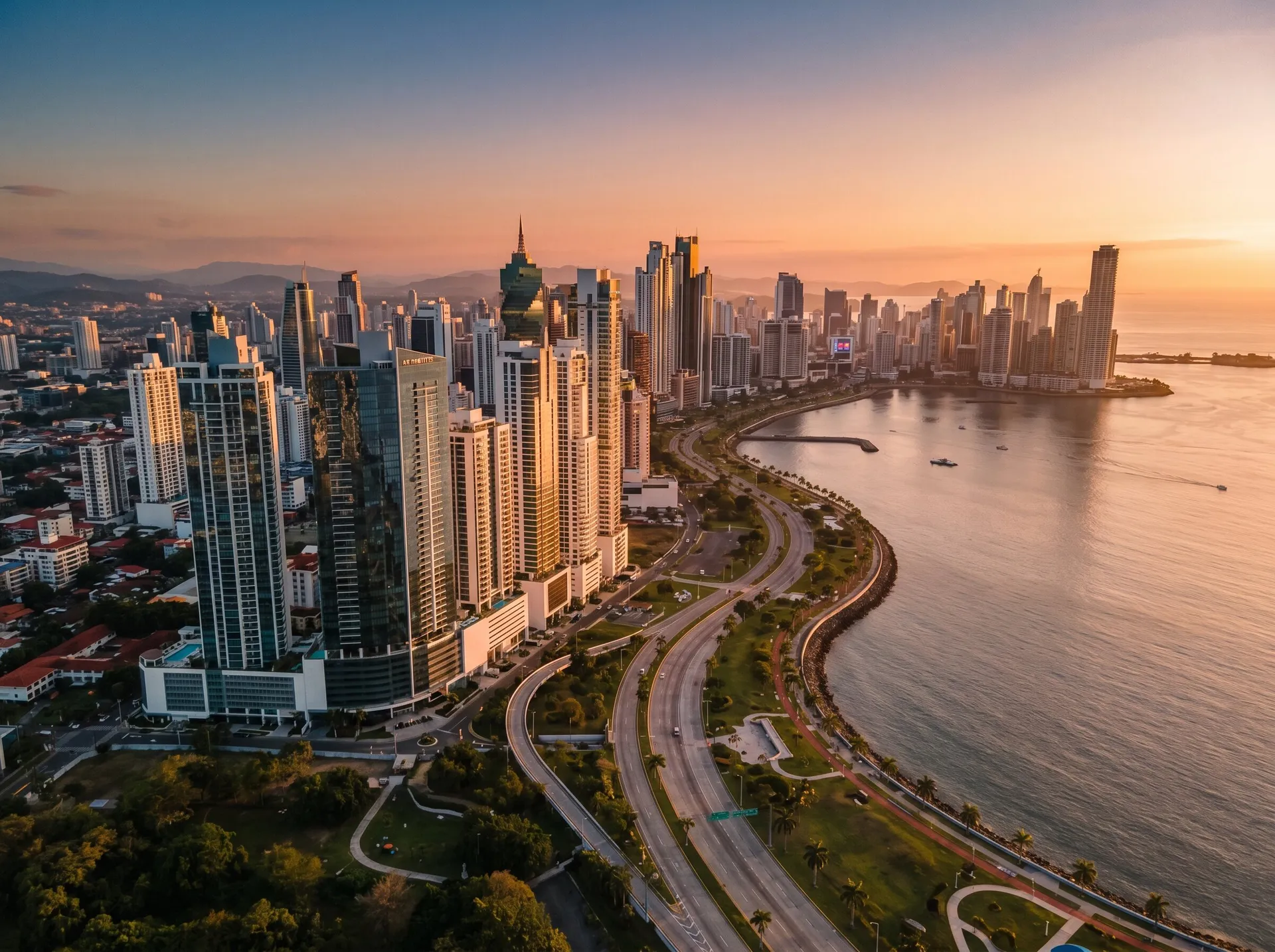
Panama real estate can be a good investment in 2026, but only if you buy for cash flow and currency safety rather than fast appreciation, and only if you buy titled stock in the right location. Gross rental yields of roughly 6 to 7 percent are realistic in well-chosen Panama City apartments, and the country runs on the US dollar, which removes the currency risk that sinks a lot of emerging-market property bets. What Panama does not reliably hand you is rapid capital growth. Prices were close to flat for most of the past decade, and parts of the market are still working off oversupply.
So this is not the unqualified "yes" the lifestyle blogs sell. It is a measured yes, with real conditions attached. Below is the reality check: what the numbers actually look like, what genuinely holds value here, and the risks that catch foreign buyers who only read the brochures.
The short version: who Panama suits, and who it does not
Panama rewards a specific kind of buyer. If you want a dollar-denominated income property, a second home that earns its keep, or a hard asset outside your home country with a low cost of entry, it fits. If you are hunting for the next market where prices double in five years, look elsewhere. Panama has been a yield story, not a flip story, and the honest data backs that up.
The rest of this article gives you the figures to decide for yourself. We do not give personalised investment advice. We lay out the considerations so you can make the call.
What rental yields actually look like in Panama
Start with the number most people get wrong. The average gross rental yield across Panama sits around 6.94 percent as of mid-2026, per Global Property Guide, with Panama City apartments averaging closer to 7.5 percent gross. Panama Equity, one of the larger brokerages in the city, puts typical city-condo yields a little more conservatively at 5 to 6 percent. Both are talking gross, before costs.
That last point matters more than the headline. Gross yield ignores vacancy, management fees, repairs, condo HOA fees, and the chunk of the year a short-term unit sits empty. Net yield, what actually lands in your account, usually runs 1.5 to 2 percentage points lower. A "7 percent" listing can be a 5 percent reality once the building fees and an honest vacancy assumption go in.
Yields also swing hard by segment and area. Here is the rough shape of it.
| Segment / area | Typical gross yield | Notes |
|---|---|---|
| Smaller city apartments (studios, 1-bed) in mid-market areas like El Cangrejo, Bella Vista | ~7 to 9% | Lower entry price drives the higher yield; strongest tenant pool |
| Mid-tier 2 to 3-bed, San Francisco, Coco del Mar, Avenida Balboa | ~6.5 to 8% | Solid long-term rental demand |
| Luxury and large units, Punta Pacifica, Santa Maria | ~5 to 6.5% | Yield compresses as price climbs; thinner buyer and tenant pool |
| Beach (Coronado and the Pacific coast) | ~5 to 7% gross | Seasonal; net shrinks after salt-air maintenance, management and vacancy |
| Short-term / Airbnb (Casco Viejo, prime city) | 7%+ possible | Higher gross, but regulatory risk and management drag are real |
The pattern is consistent: the cheaper the unit, the higher the gross yield, and the bigger and shinier the unit, the lower it gets. Luxury towers are bought for prestige and capital preservation, not income, which is exactly why their yields are thin.
If you want to pressure-test specific buildings and price points, the Panama Property Finder lets you filter by budget and goal before you ever talk to an agent.
The appreciation reality (this is the part blogs skip)
For roughly a decade, Panama City prices barely moved. A construction boom in the 2010s left the city with years of oversupply, and that surplus kept prices broadly flat. Panama Equity is blunt about it: prices today are "nearly identical" to where they sat in 2013. Independent market trackers describe the same muted pattern, with the market recovering only modestly from a 2021 dip.
The forward view is more positive but still grounded. Inventory has tightened to multi-year lows, rents have climbed for over a year, and new-construction prices per square metre rose more than 15 percent in the twelve months to early 2026, according to the brokerage Panama Equity's Q1 2026 report. Forecasters now project something in the region of 3.5 to 5.5 percent nominal appreciation per year over the next several years, with prime, walkable locations expected to do best and generic oversupplied towers expected to lag.
Read that carefully. Single-digit, location-dependent appreciation is the credible base case. Not a boom. Anyone promising you 10 to 15 percent a year in Panama is selling, not forecasting.
What genuinely supports value in Panama
Three things do most of the heavy lifting for Panama property that holds and grows its value.
Location, and specifically walkable, well-connected city neighbourhoods. Prime areas with amenities and infrastructure are the ones forecast to appreciate; cookie-cutter towers in oversupplied corridors are not. The same square metre is worth very different money depending on the building and the street. Our area guides to Coronado, Punta Pacifica and Costa del Este break down the trade-offs.
Clean, titled stock. Titled property recorded in the Public Registry is the only kind you can mortgage, insure cleanly, and resell without a discount for risk. It is what defends your capital. The cheaper "deals" that turn into nightmares are almost always the other kind, which we cover next.
Proximity to quality healthcare and services. A large slice of Panama's foreign buyers are retirees and semi-retirees. Property within reach of the well-regarded private hospitals in Panama City, and increasingly in hubs like David, draws a deeper, more durable pool of buyers and long-term tenants. That demand is what underpins resale.
Add the structural tailwinds: Panama runs on the US dollar, residency-by-investment programs (a $200,000 to $300,000 property buy can anchor residency) keep pulling in buyers, and major infrastructure (a fourth bridge over the Canal, a westward metro line) is under construction. None of these guarantees appreciation. All of them support the floor under values.
The risks, honestly
This is where a credible take separates itself from a sales pitch. Every one of these is real, and every one is manageable if you go in with your eyes open.
Rights-of-possession land. Panama has two kinds of "ownership." Titled property is recorded and protected. Rights of possession (derecho posesorio) is not ownership at all; it is an informal right to occupy government land, it cannot be conventionally mortgaged, and it is far weaker against competing claims. A lot of cheap beachfront and rural land marketed to foreigners is rights of possession dressed up as a bargain. Treat the discount as a warning, not a gift. We cover the full distinction in titled property vs rights of possession.
Oversupply in parts of the City condo market. The decade of flat prices was caused by too many near-identical condos. That overhang has thinned but not vanished. Specific high-rise clusters still face rent competition and slower sales, and the luxury preconstruction segment above roughly $800,000 carries the most unsold, completed inventory. Buy the wrong tower and you compete with fifty identical units on both rent and resale.
Liquidity and resale. Panama is a small, slower market. Average days-on-market for city residential runs roughly 90 to 120 days, and units in oversupplied buildings can sit far longer. This is not a market you can exit in a hurry at full price. Plan to hold for years, not months.
No MLS, and a fragmented, low-transparency market. Panama has no widely adopted multiple-listing service. An MLS run by the realtor association ACOBIR exists, but only a fraction of brokers use it, so most deals never pass through it. Listings are scattered across portals, agencies, and private pocket networks. The same property appears multiple times at different prices, and there is no public record of actual sale prices. The result, in the words of brokers who work here daily, is that what you see online is not the full picture, and it is easy to overpay. This is the single strongest argument for independent representation and your own attorney.
Financing friction for foreigners. Mortgages exist but are not generous to non-residents. Expect roughly 30 to 50 percent down, interest rates around 6.5 to 8 percent or higher, stricter terms on investment (non-primary) property, and often a requirement that the loan be repaid by retirement age, commonly around 75 with many banks. Many foreign buyers simply pay cash. Build your plan around that likelihood, not around easy leverage.
Currency (this one is a plus). Panama uses the US dollar. For a dollar-based investor that removes the devaluation risk that wrecks returns elsewhere in Latin America. For a non-dollar buyer, a weaker dollar in 2025 to 2026 has actually made Panama cheaper to enter. Either way, the dollar economy is a genuine strength, not a footnote.
A US tax note: if you are a US person, foreign rental income and any future sale carry US reporting and tax consequences that sit entirely outside Panama's rules. That is its own conversation, and a one-line pointer is all it needs here. Book a cross-border tax consultation if that applies to you.
So, is it a good investment for you?
Panama real estate suits you if:
- You are buying primarily for yield, currency safety, or a residency-linked asset, with appreciation as a bonus rather than the thesis.
- You can pay cash, or you accept tight, costly financing.
- You will buy titled property in a strong location and hold for years.
- You will use independent counsel and verify everything, because the market will not protect you from itself.
It probably does not suit you if:
- You need rapid capital growth or a quick flip.
- You need to be able to sell fast at full price.
- You are tempted by a cheap, "too good" beachfront or rural deal without checking title.
- You are relying on easy, high-leverage financing to make the numbers work.
Buy the right asset, in the right place, the right way, and Panama is one of the more rational property markets in the region. Buy on a brochure and a feeling, and it can punish you quietly for years.
When you want a second set of eyes on the structuring and the cross-border tax side before you commit, book a consultation and we will walk through your specific situation.
FAQ
What rental yield can I realistically expect in Panama?
Gross yields average around 6 to 7 percent in Panama City, higher (7 to 9 percent) for smaller, lower-priced units and lower (5 to 6 percent) for luxury. Net yield, after fees, vacancy and maintenance, typically runs 1.5 to 2 percentage points below the gross figure.
Does Panama property actually appreciate?
Modestly. Prices were close to flat for most of the past decade due to oversupply. The credible forward forecast is roughly 3.5 to 5.5 percent a year, concentrated in prime, well-located stock. Treat appreciation as a bonus, not the reason to buy.
What is the biggest risk for foreign buyers?
Buying rights-of-possession land believing it is titled. It cannot be conventionally mortgaged and is far weaker legally. Insist on titled property recorded in the Public Registry and have your own attorney confirm it before any money moves.
Can I get a mortgage in Panama as a foreigner?
Sometimes, but expect 30 to 50 percent down, interest rates around 6.5 to 8 percent or higher, stricter terms for investment property, and often a requirement that the loan be repaid by retirement age, commonly around 75 with many banks. Many foreign buyers pay cash.
Continue reading
Costa del Este vs Punta Pacifica: Which Is Better to Buy In?
In closing
Let’s talk.
A single conversation usually clarifies more than a month of research. We engage on a value basis, and every introduction begins with a direct, confidential exchange.
We advise on
- Cross-Border Tax
- International Corporate Advisory
- Multi-jurisdictional Asset Structuring
- Panama Relocation
Rothbard Group S.A.
A boutique cross-border tax and corporate advisory firm. Licensed U.S. Enrolled Agent authorized to practice before the Internal Revenue Service.