
How to Buy Property in Panama as a Foreigner (2026 Guide)
Foreigners can fully own titled property in Panama with the same rights as citizens, no residency required. Here is the process, the real costs, the taxes you owe afterward, and the mistakes that catch foreign buyers.
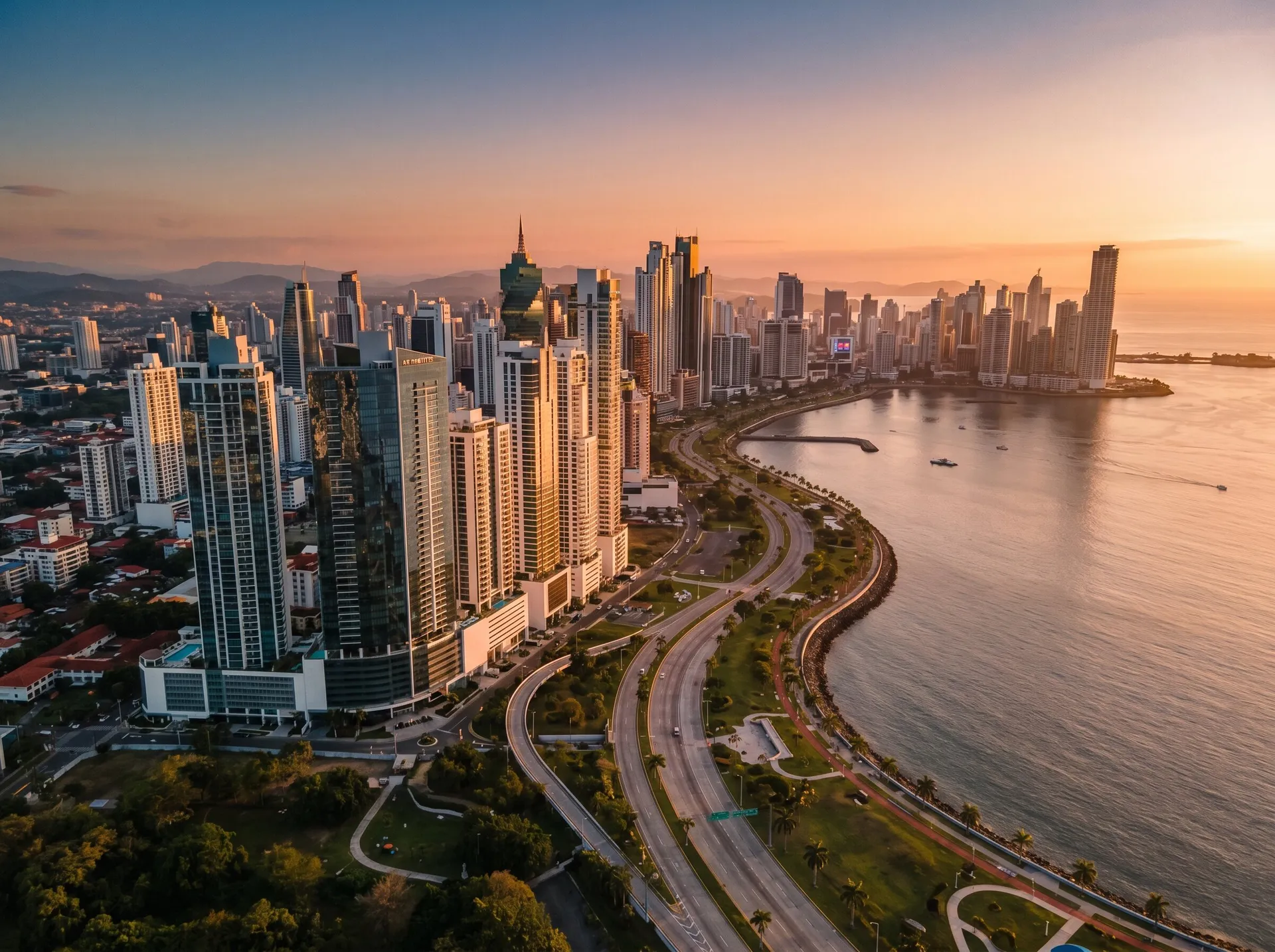
Yes, you can buy and fully own property in Panama as a foreigner, with the same ownership rights as a Panamanian citizen and no requirement to live here or hold residency. The catch is not whether you are allowed to buy. It is what you buy and who checks it before your money moves. Get those two things right and Panama is one of the most straightforward places in Latin America to own real estate. Get them wrong and you can spend years, and a lot of money, untangling it.
This guide walks through exactly how the purchase works, what it costs, what you owe afterward, and the specific mistakes that catch foreign buyers.
Can a foreigner actually own property in Panama?
In almost all of the country, yes. Panama's constitution gives foreign buyers the same property rights as citizens. You do not need to be a resident, you do not need a local partner, and you can hold the title in your own name or through a Panamanian company or foundation.
There are three real limits, and they are narrow:
- The 10-kilometre border rule. Foreigners cannot own land within 10 km of an international border. In practice that affects pockets of Chiriqui, Bocas del Toro and Darien near the Costa Rica and Colombia frontiers, not the places most buyers are looking.
- The coastal public zone. The strip measured from the high-tide line inland is public maritime domain and cannot be privately titled. Beachfront homes sit behind that line, which is one reason coastal title needs careful checking.
- Indigenous comarca land, which is held communally and is not for sale.
Outside those, a foreigner can buy a city condo, an inland home, or an island, the same as anyone else.
The one distinction that protects your money: titled vs rights of possession
This is the single most important thing to understand before you fall in love with a listing. Panama has two very different kinds of ownership.
Titled property (propiedad titulada) is surveyed, recorded in the national Public Registry (Registro Publico) under its own finca number, and protected by law. You can mortgage it, insure the title, and defend it in court. This is what you want.
Rights of possession (derecho posesorio, or ROP) is not ownership at all. It is an informal right to occupy land the government still owns. It is not in the Public Registry, cannot be conventionally mortgaged, and offers far weaker protection against competing claims. A lot of the cheaper beachfront and rural land marketed to foreigners is ROP, not title. It can sometimes be converted to title through the land authority, ANATI, but that is a survey-and-adjudication process that commonly runs one to three years or more, with no guaranteed outcome.
The short version: insist on titled property unless you have expert local counsel and a clear-eyed view of the risk. We cover the full comparison in our guide to titled property vs rights of possession in Panama.
The buying process, step by step
A clean purchase usually takes 30 to 60 days from accepted offer to a title in your name. Here is the sequence.
- Agree terms and sign a promise of sale (promesa de compraventa). This is the binding contract. It sets the price, the payment schedule, the due-diligence window, and the conditions. A deposit of roughly 5 to 10 percent goes into escrow, not into the seller's pocket. Have your own lawyer draft or review this before you sign, and do not release any deposit until you do.
- Due diligence. Your independent attorney pulls the property's finca number at the Registro Publico, confirms the seller is the registered owner, and runs an encumbrance search (busqueda de gravamenes) for mortgages, liens, easements, unpaid taxes, or court orders attached to the property. For anything coastal or rural, this is also where ROP versus title gets confirmed.
- Final deed (escritura publica). Once due diligence clears, the sale is signed as a public deed before a Panamanian notary, and the balance is paid.
- Registration. The deed is filed with the Public Registry and recorded in your name. This step typically takes two to four weeks, and only when it is done are you the legal owner.
The non-negotiable: use your own attorney
The agent works for the seller. The seller's lawyer works for the seller. You need your own independent Panamanian real-estate attorney whose only job is protecting you. This is the cheapest insurance in the entire transaction, usually around 1 to 1.5 percent of the price, and it is what stands between you and the encumbrances, ROP surprises and title defects that cause nearly every horror story.
What it actually costs
Closing costs in Panama are low by international standards. As the buyer, budget roughly 2 to 4 percent of the purchase price.
| Cost | Who usually pays | Rough amount |
|---|---|---|
| Your legal fees | Buyer | ~1 to 1.5% |
| Notary + Public Registry fees | Buyer | ~0.3 to 0.5% |
| Transfer tax | Seller | 2% of the higher of price or registered value |
| Capital gains advance | Seller | 3% advance against a 10% gains tax |
| Agent commission | Seller | ~5% |
Two things worth knowing. First, the big-ticket items (transfer tax, capital gains, commission) are customarily the seller's, which is why a seller's all-in cost runs higher than a buyer's. Second, the long-standing exemption on a developer's first sale is gone: Law 468 of 2025 repealed it, so as of 2026 the 2 percent transfer tax applies to every sale, including a brand-new home bought directly from a developer. On a new unit the tax is formally the developer's to pay, but it is usually built into the price.
Property taxes after you buy
Panama's property tax is genuinely light if the home is your primary residence. Under Law 66, a property registered as your primary residence or family patrimony (Patrimonio Familiar Tributario) is exempt on the first US$120,000 of registered value, then taxed at just 0.5 percent from $120,001 up to $700,000, and 0.7 percent above that.
Three details save real money:
- You have to register the primary-residence designation with the Direccion General de Ingresos. It is not automatic.
- A newly bought primary home valued between $120,000 and $300,000 can get an additional three-year exemption when you register it.
- Your tax is assessed on the registered value at purchase and does not climb automatically as the market value rises.
Second homes, rentals and commercial property sit on a separate, slightly higher schedule. We break down every band, and how to register, in our Panama property taxes guide.
The mistakes that cost foreigners money
- Paying a deposit before an independent lawyer has reviewed the promesa.
- Buying rights-of-possession land believing it is titled.
- Using the seller's or agent's lawyer instead of your own.
- Skipping the encumbrance search and inheriting someone else's debt or lien.
- Trusting a verbal it is all titled without seeing the finca number at the Registry.
Every one of these is avoidable with the right counsel and a proper title search. For the full checklist, see how to avoid real-estate scams when buying in Panama.
Ready to look at specific areas?
Where you buy changes the price, the rental demand and the lifestyle as much as anything. Start with our area guides to Coronado, Punta Pacifica and Costa del Este, or use the Panama Property Finder to narrow by budget and goal. When you want a second set of eyes on the money and structuring side of a purchase, book a consultation and we will walk through it with you.
FAQ
Can foreigners buy property in Panama?
Yes. Foreigners have the same ownership rights as Panamanian citizens and do not need residency, except within 10 km of an international border, the public coastal zone, and indigenous comarca land.
How long does it take to buy property in Panama?
Usually 30 to 60 days from accepted offer to registered title, most of which is due diligence and the two-to-four-week Public Registry recording.
What are the closing costs for a buyer in Panama?
Around 2 to 4 percent of the price, mainly your legal fees and notary and registry fees. The transfer tax, capital-gains advance and agent commission are customarily paid by the seller.
Do I need to be in Panama to buy?
No. With a power of attorney to your Panamanian lawyer, much of the process can be completed remotely, though many buyers prefer to attend the signing.
Is beachfront property safe to buy?
Only if it is properly titled. A large share of beachfront sold to foreigners is rights of possession, which carries far more risk. Confirm title before you commit.
In closing
Let’s talk.
A single conversation usually clarifies more than a month of research. We engage on a value basis, and every introduction begins with a direct, confidential exchange.
We advise on
- Cross-Border Tax
- International Corporate Advisory
- Multi-jurisdictional Asset Structuring
- Panama Relocation
Rothbard Group S.A.
A boutique cross-border tax and corporate advisory firm. Licensed U.S. Enrolled Agent authorized to practice before the Internal Revenue Service.